As usual, all info gathered from the website of the Arizona Legislature or other online sources, and subject to change without notice.
"SHR" indicates that a meeting room is a Senate Hearing Room; "HHR" indicates a House Hearing Room.
Committee hearings on the Senate side of the Capitol this week -
- Rules will meet in Caucus Room 1 on Monday upon adjournment of the floor session. The agenda is a long one, but the meeting probably won't be, as the committee exists only as a gatekeeper/rubber stamp. It either refuses to hear any bills that the Senate President doesn't like and to push through those he does approve of. Lowlights this week: SB1136 and SR1001, a bill to block a tribal casino in the West Valley and a resolution opposing that casino. Those bills are being fast-tracked by the anti-Native nativists in the Senate.
- Natural Resources and Transportation will meet in SHR109 on Monday upon adjournment of the Rules meeting. Not many bills on the agenda, but they will consider the first executive nominations of the session. Most of the nominees are big R contributors.
- Education will meet in SHR3 on Monday upon adjournment of Rules. Lowlights: SB1116, Sen. Andy Biggs bid to make permanent "displaced pupils choice grants" (AKA "private school vouchers") and SB1053 and SB1055, Sen. Linda Gray's bills relating to "character education" ("character" is something that cost a former Arizona Treasurer his job).
- Banking and Insurance will meet in SHR3 on Tuesday at 2 p.m. One bill on the agenda thus far: SB1122, Sen. Nancy Barto's move to make "health care sharing ministries" tax exempt.
- Appropriations will meet in SHR109 on Tuesday at 2 p.m. No bills on the agenda. Budget hearings for "statewide debt, community colleges, and Department of Health Services."
- Public Safety and Human Services will meet in SHR3 on Wednesday at 9 a.m. Likely lowight: SB1018, a measure that further privatizes certain Department of Corrections operations (in this case, prisoner transition services).
- Government Reform will meet in SHR1 on Wednesday at 9 a.m. Interesting bill: SB1165, a measure from Sen. Steve Yarbrough, to bar municipalities from contracting with third parties to audit sales tax transactions or for the "collection, administration or processing" of such transactions (referred to in the bill as "transaction privilege" taxes).
- Water, Land Use, and Rural Development will meet in SHR3 on Wednesday at 2 p.m. Agenda looks quiet so far.
- Healthcare and Medical Liability Reform will meet in SHR1 on Wednesday at 2 p.m. Short agenda. The one interesting bill looks to be SB1176, innocuously titled "medical board: omnibus." Among other things, it would serve to reduce public disclosure of the misdeeds of medical professionals.
- Economic Development and Jobs Creation will meet in SHR109 on Wednesday at 2 p.m. Looks quiet so far - one bill, one executive nomination, one presentation (from a business lobbying group, the National Federation of Independent Business - Arizona..
- Finance will meet in SHR1 on Thursday at 9 a.m. A few executive nominations and some tax- and pension-related bills, most of which I do NOT understand well enough to summarize here. Visit the legislature's "Bill Info" page if you want to look up one or more of them.
- Border Security, Federalism, and States Sovereignty will meet in SHR109 on Thursday at 9 a.m. This one is Sen. Sylvia Allen's committee, so it isn't surprising that while the agenda is a short one, it's colorful. They'll start with a "presentation" from a group of anti-immigration ranchers from southern AZ, follow with consideration of SB1178, a Tenth Amendment/"federal government go away!" bill and SCR1006, a resolution supporting the aforementioned ranchers' "border security" plan (a "plan" that includes militarizing the border and roundups of immigrants).
Nothing on the agenda indicates that the assemblage will break into a chorus of the Horst Wessel song, but with this crew, ear plugs and a barf bag might be necessary.
- Various subcommittees of Appropriations will hold budget hearings Friday morning at 9 a.m. Agendas here, here, and here.
On the House side -
- Rules will meet in HHR4 on Monday at 1 p.m. As with its Senate counterpart above, the agenda is long and boring, with the most contentious bills likely to be the House versions of the anti-tribal casino bills.
- Ways and Means will meet in HHR1 on Monday at 2 p.m. As with its Senate counterpart above (Senate Finance Committee), I don't understand most of the bills. Here however, most of the bills have been spawned by Rep. Jack Harper, and anything with his name on it is presumed to be a bad bill. However, one I *do* understand is Harper's HCR2006, a bill to radically raise the amount raise the amount of business property (equipment, etc.) exempted from taxation from the current $50K to "an amount equal to the earnings per employee of twenty workers in this state according to a designated national measure of earnings per employee adjusted annually as provided by law." The most current numbers for per capita income in Arizona (not an exact language match with the measure, but it will do for this post):
$34,335.
20 times that number: $686,700, or an increase of almost 1300%. The real number would almost certainly be higher because I'm sure the Rs would find a "measure" that inflated employee earnings as much as possible.
- Energy and Natural Resources will meet in HHR4 on Monday at 2 p.m. Quiet so far.
- Education will meet in HHR3 on Monday at 2 p.m or upon adjournment of the House floor session. On the agenda: HB2197, Rep. Debbie Lesko's bill to bar the establishment or operation of a charter school "in an age restricted community that is located in unorganized territory." It has an emergency clause to provide for immediate enactment.
- Banking and Insurance will meet in HHR2 on Monday at 2 p.m. Looks quiet so far - a couple of presentations, and a few bill that I mostly don't understand.
- Government will meet in HHR4 on Tuesday at 2 p.m. Lowlight: HB2153, Rep. Steve Montenegro's move to bar municipalities and counties from passing any new ordinances to require that newly-constructed homes have fire sprinklers. Ordinances that were enacted before December 31, 2009 would stand, however.
- Environment will meet in HHR5 on Tuesday at 2 p.m. Presentations only, so far.
- Employment and Regulatory Affairs will meet in HHR3 on Tuesday at 2 p.m. Looks relatively quiet, though the one bill on the agenda is the subject of the first strike-everything amendment of the session. It's a "same subject" amendment and doesn't look to be greatly different than the original bill.
- Higher Education, Innovation, and Reform will meet in HHR2 on Wednesday at 9 a.m. Quiet so far.
- Health and Human Services will meet in HHR4 on Wednesday at 9:45 a.m. Looks pretty quiet so far.
- Commerce will meet in HHR5 on Wednesday at 10 a.m. On the agenda: Rep. John Kavanagh's HB2102, adding "fingerprint clearance card" to the list of documents that cannot be issued to/for people who cannot definitively prove their immigration status.
- Appropriations will meet in HHR1 on Wednesday at 2 p.m. Budget hearings only, so far.
- Transportation will meet in HHR3 on Thursday at 9 a.m. Lowlight: HB2288, Rep. Jeff Dial's scheme to force the state's aiports to abandon the Transportation Security Administration (TSA) and totally privatize their security and screening operations.
There once was an era in American history where airport security was left to the tender mercies of the profit-driven, low-bidder-seeking corporate mentality.
That era ended on September 11, 2001.
- Technology and Infrastructure will meet in HHR1 on Thursday at 9 a.m. Only bill on the agenda: HB2502, Rep. Carl Seel's proposal to mandate that if a public agency advertises some sort of program for the public, the agency must declare the source of its funding.
- Judiciary will meet in HHR4 on Thursday at 9 a.m. Only bill on the agenda: HB2141, a bill from Rep. Jack Harper relating to county realignment. Not sure what he's up to with this one, but it's Jack Harper - his proposals are presumed bad.
- Agriculture and Water will meet in HHR5 on Thursday at 9 a.m. Looks quiet so far.
Other events at or around the Capitol this week:
- It's "National School Choice Week" so in addition to a number of other events, on Wednesday, the American Federation for Children will hold a legislators-only luncheon and movie showing at the Associated General Contractors Building, 1825 W. Adams.
That's a nice sounding name for an organization, but it is dedicated to undermining public education systems by lobbying legislators to siphon more and more money away from publc ed to private schools through vouchers.
- The only event on the Governor's public schedule for the coming week is a press conference on Monday with a "special announcement regarding education reform."
Since the unwritten rules of "political theater" usually call for such events to take place among students in a school and this one will be on the 2nd floor of the Capitol's Executive Tower, it's likely that the about-to-be-proposed "reform" isn't one that is likely to benefit students or schools.
Of course, I'm a cynic of long standing. :)
- Other events can also be found here, courtesy the Arizona Capitol Times.
Later...
Sunday, January 23, 2011


Saturday, January 22, 2011
Congratulations to Andrei Cherny, the new Chair of the Arizona Democratic Party
After some procedural wrangling, the Democrats of Arizona united to chose Andrei Cherny, former White House staffer, Assistant Arizona Attorney General, and 2010 Democratic nominee for Arizona Treasurer, to be their chair for the 2011-2012 election cycle.

The race between Andrei and Rodney Glassman was a close one, but after the votes were counted, they shook hands and pledged to work for the best future for Arizona and the Arizona Democratic Party.
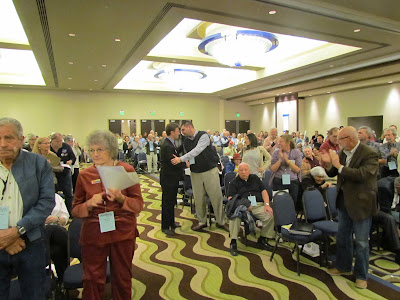

The race between Andrei and Rodney Glassman was a close one, but after the votes were counted, they shook hands and pledged to work for the best future for Arizona and the Arizona Democratic Party.

Friday, January 21, 2011
Keith Olbermann out at MSNBC
From Huffington Post -
Later...
Keith Olbermann and MSNBC have ended their contract, according to a statement from MSNBC. The last episode of "Countdown" will air this evening, Friday, January 21.This news is a little stunning, yet it isn't entirely surprising, given Comcast's recent takeover of MSNBC. Guesses are that Rachel Maddow is next, but we'll see what happens in the coming days and weeks.
MSNBC's statement reads as follows:
MSNBC and Keith Olbermann have ended their contract. The last broadcast of "Countdown with Keith Olbermann" will be this evening. MSNBC thanks Keith for his integral role in MSNBC's success and we wish him well in his future endeavors.
Later...
Arizona Democratic Party chair race: time to close ranks and unite
As most observers have probably already noted, I don't often write about the inner workings of the Arizona Democratic Party (or the Arizona Republican Party, for that matter), mostly because most readers find that kind of "inside baseball" stuff really boring.
Either they're insiders and know this stuff already, or they're not insiders and they don't care about it in the first place.
However, the current jockeying for the chairmanship of the Arizona Democratic Party has made it into the MSM, so the whole thing merits a temporary waiving of my personal policy in this regard.
Every two years, political parties in Arizona reorganize, choosing new leaders for the next election cycle, and that's where the Democrats and Republicans are right now, heading into Saturday's meetings of their respective State Committees.
I'll leave it to the various Republican bloggers to "discuss" what's going on in their party; suffice it to say that anyone that they choose to lead them for the next two years is someone that I'm going to disagree with, on pretty much all significant issues.
Two candidates for ADP chair have emerged - Rodney Glassman, the former Tucson City Council member and 2010 Democratic nominee for U.S. Senate, and Andrei Cherny, the former White House staffer, Assistant Arizona Attorney General, and 2010 Democratic nominee for Arizona Treasurer.
Various pro and con factions have formed, and the "jockeying" has involved more than a few elbows being thrown. The level of rancor has risen to the point where an email went out yesterday, signed by former Attorney General Terry Goddard and current Congressman Raul Grijalva, urging a one month delay in electing a new slate of officers.
I'm not sure I agree with that idea, but I undertstand it. Discussion has become rancorous, and a lot of people are still reeling from the shootings in Tucson two weeks ago. A month's delay may give time for everyone to calm down and to heal a little.
However, putting this off for a month may also give time for the current disagreements to grow into outright rifts.
As a member of the ADP's State Committee, I can state unequivocally that we've been buried in emails trumpeting this or that endorsement, and many of us are getting sick of the noise.
It's time to settle the matter, and regardless of how the votes tally, unite behind the new chair, whoever that might be.
Full disclosure time: As a State Committee member, I will be voting tomorrow, and for a number of reasons, have decided to support Andrei Cherny. He isn't a perfect candidate, but he is a *good* candidate, and even more importantly, he is the *better* candidate.
I've met both candidates, but don't know either one well, so I've relied on the impressions of friends of mine who do know one, the other, or both personally.
Everyone that I've spoken to has been impressed by Andrei's intellect and energy. Everyone that I've spoken to about Rodney, especially the ones who worked on his campaign, are less complimentary of him.
Also impressive was Andrei's performance in a low-profile, downballot race.
Many folks have focused on the ability to raise money, and to be sure, that is a very important ability in a state chair (and one that favors Cherny).
However, an even bigger part of a state chair's job is the ability to reach people, and Andrei did that almost 686K times, including winning his race in Pima County with over 151K votes. Rodney also ran statewide, and received 592K votes. He lost Pima County, receiving only 134K votes there.
Not only was that loss in Pima the first loss in a significant statewide race for a D in years, Pima is Rodney's home county.
He couldn't even reach the people who know him best in an area that tends to vote for Democrats.
That doesn't bode well for what will happen if he is elected state chair.
I like Rodney, based on the few contacts that I've had with him, and I like a lot of his supporters, a few of whom are friends, but on this matter, I am in disagreement with those friends.
I fervently hope that regardless of how the vote goes tomorrow, all of the state's Democrats, friends and strangers alike, will be able to cast their differences aside and unite behind the new chair.
See you tomorrow at the Wyndham, BYOP*.
* - Bring Your Own Popcorn :))
Either they're insiders and know this stuff already, or they're not insiders and they don't care about it in the first place.
However, the current jockeying for the chairmanship of the Arizona Democratic Party has made it into the MSM, so the whole thing merits a temporary waiving of my personal policy in this regard.
Every two years, political parties in Arizona reorganize, choosing new leaders for the next election cycle, and that's where the Democrats and Republicans are right now, heading into Saturday's meetings of their respective State Committees.
I'll leave it to the various Republican bloggers to "discuss" what's going on in their party; suffice it to say that anyone that they choose to lead them for the next two years is someone that I'm going to disagree with, on pretty much all significant issues.
Two candidates for ADP chair have emerged - Rodney Glassman, the former Tucson City Council member and 2010 Democratic nominee for U.S. Senate, and Andrei Cherny, the former White House staffer, Assistant Arizona Attorney General, and 2010 Democratic nominee for Arizona Treasurer.
Various pro and con factions have formed, and the "jockeying" has involved more than a few elbows being thrown. The level of rancor has risen to the point where an email went out yesterday, signed by former Attorney General Terry Goddard and current Congressman Raul Grijalva, urging a one month delay in electing a new slate of officers.
I'm not sure I agree with that idea, but I undertstand it. Discussion has become rancorous, and a lot of people are still reeling from the shootings in Tucson two weeks ago. A month's delay may give time for everyone to calm down and to heal a little.
However, putting this off for a month may also give time for the current disagreements to grow into outright rifts.
As a member of the ADP's State Committee, I can state unequivocally that we've been buried in emails trumpeting this or that endorsement, and many of us are getting sick of the noise.
It's time to settle the matter, and regardless of how the votes tally, unite behind the new chair, whoever that might be.
Full disclosure time: As a State Committee member, I will be voting tomorrow, and for a number of reasons, have decided to support Andrei Cherny. He isn't a perfect candidate, but he is a *good* candidate, and even more importantly, he is the *better* candidate.
I've met both candidates, but don't know either one well, so I've relied on the impressions of friends of mine who do know one, the other, or both personally.
Everyone that I've spoken to has been impressed by Andrei's intellect and energy. Everyone that I've spoken to about Rodney, especially the ones who worked on his campaign, are less complimentary of him.
Also impressive was Andrei's performance in a low-profile, downballot race.
Many folks have focused on the ability to raise money, and to be sure, that is a very important ability in a state chair (and one that favors Cherny).
However, an even bigger part of a state chair's job is the ability to reach people, and Andrei did that almost 686K times, including winning his race in Pima County with over 151K votes. Rodney also ran statewide, and received 592K votes. He lost Pima County, receiving only 134K votes there.
Not only was that loss in Pima the first loss in a significant statewide race for a D in years, Pima is Rodney's home county.
He couldn't even reach the people who know him best in an area that tends to vote for Democrats.
That doesn't bode well for what will happen if he is elected state chair.
I like Rodney, based on the few contacts that I've had with him, and I like a lot of his supporters, a few of whom are friends, but on this matter, I am in disagreement with those friends.
I fervently hope that regardless of how the vote goes tomorrow, all of the state's Democrats, friends and strangers alike, will be able to cast their differences aside and unite behind the new chair.
See you tomorrow at the Wyndham, BYOP*.
* - Bring Your Own Popcorn :))
Redistricting Update: Two Republican replacement nominees selected
The Arizona Commission on Appellate Court Appointments selected Republicans Crystal Russell and Richard Stertz to replace two other Republicans who had been found ineligible for membership on the Arizona Independent Redistricting Commission (AIRC).
The Commission, per its legal duties, had forwarded the names or 10 Republicans, 10 Democrats, and 5 Independent applicants to the AIRC. From that list, the leader of each caucus in each chamber will select one person to serve on the AIRC. The four members so selected will then choose a fifth member from the list of Independents to act as chair of the AIRC (there are other possible variations based on the possiblity that one of the legislators could select someone not of their own party, but most observers consider that to be unlikely).
House Speaker Kirk Adams (R) and Senate President Russell Pearce (R) filed suit over the original list, claiming that three of the 25 names weren't eligible because they held public office. Republicans Stephen Sossaman and Mark Schnepf were/are on irrigation district governing boards and Independent Paul Bender has served as a judge on a couple of tribal courts. Many observers felt that Sossaman and Schnepf were "thrown under the bus" in order to mask the partisan nature of the attack on Bender's qualifications. Bender is a law professor at ASU and a noted progressive. He's also widely considered, even by his detractors, to be brilliant.
The Supreme Court agreed with Pearce and Adams regarding Sossaman and Schnepf, but found that Bender's offices with the courts of sovereign tribal nations didn't qualify as "public offices" under Arizona law.
The meeting went along pretty efficiently. After some brief opening remarks, they immediately and unanimously decided to consider only the five applicants who were interviewed by the Commission but hadn't made it on to the original list of names sent to the leadership of the legislature.
There was concern expressed over the lack of geographic diversity among the nominees, and while the members of the Commission felt that they didn't do anything improper with the formation of the original list, the issue of geographic diversity was clearly on their minds as they proceeded.
After a motion to nominate Russell and Christopher Gleason as the two replacements, the Commission briefly went into executive session to discuss some legal advice.
After that session, the motion was amended to separate the nominations.
Russell was approved unanimously. After discussion over the nature of some of Gleason's political ties, he was nominated. His nomination failed by a 4 - 8 vote.
After that vote, Jeffrey Miller was nominated. His nomination failed, also by a 4 - 8 vote.
The next name considered was Stertz, and his nomination passed by an 11 - 1 vote.
Chief Justice Rebecca White Berch thanked the Commission members for gathering together on such short notice and adjourned the meeting, less than an hour after it began.
Now, let the four-way chess match begin, and a chess match it will be because each selection by a leader of the legislature will constrain the selections that follow.
Later...
The Commission, per its legal duties, had forwarded the names or 10 Republicans, 10 Democrats, and 5 Independent applicants to the AIRC. From that list, the leader of each caucus in each chamber will select one person to serve on the AIRC. The four members so selected will then choose a fifth member from the list of Independents to act as chair of the AIRC (there are other possible variations based on the possiblity that one of the legislators could select someone not of their own party, but most observers consider that to be unlikely).
House Speaker Kirk Adams (R) and Senate President Russell Pearce (R) filed suit over the original list, claiming that three of the 25 names weren't eligible because they held public office. Republicans Stephen Sossaman and Mark Schnepf were/are on irrigation district governing boards and Independent Paul Bender has served as a judge on a couple of tribal courts. Many observers felt that Sossaman and Schnepf were "thrown under the bus" in order to mask the partisan nature of the attack on Bender's qualifications. Bender is a law professor at ASU and a noted progressive. He's also widely considered, even by his detractors, to be brilliant.
The Supreme Court agreed with Pearce and Adams regarding Sossaman and Schnepf, but found that Bender's offices with the courts of sovereign tribal nations didn't qualify as "public offices" under Arizona law.
The meeting went along pretty efficiently. After some brief opening remarks, they immediately and unanimously decided to consider only the five applicants who were interviewed by the Commission but hadn't made it on to the original list of names sent to the leadership of the legislature.
There was concern expressed over the lack of geographic diversity among the nominees, and while the members of the Commission felt that they didn't do anything improper with the formation of the original list, the issue of geographic diversity was clearly on their minds as they proceeded.
After a motion to nominate Russell and Christopher Gleason as the two replacements, the Commission briefly went into executive session to discuss some legal advice.
After that session, the motion was amended to separate the nominations.
Russell was approved unanimously. After discussion over the nature of some of Gleason's political ties, he was nominated. His nomination failed by a 4 - 8 vote.
After that vote, Jeffrey Miller was nominated. His nomination failed, also by a 4 - 8 vote.
The next name considered was Stertz, and his nomination passed by an 11 - 1 vote.
Chief Justice Rebecca White Berch thanked the Commission members for gathering together on such short notice and adjourned the meeting, less than an hour after it began.
Now, let the four-way chess match begin, and a chess match it will be because each selection by a leader of the legislature will constrain the selections that follow.
Later...
Thursday, January 20, 2011
R response to the furor over legislators illegally carrying guns at the legislature: Make it legal
One of the interesting tidbits arising from the opening of the legislature last week was the story of a number of legislators carrying firearms with them on the floors of each chamber. One of them, Sen. Lori Klein, later confirmed to me (and others) that she had a gun with her both in the Senate and in the House when she attended the Governor's speech that day.
While some might attribute this turn of events to the recent shooting in Tucson, where six people were killed and more than another dozen were wounded, including Congresswoman Gabrielle Giffords, but a gunman who attacked a "Congress On Your Corner" gathering, this is hardly the first time in recent memory that a legislator has bragged about "packin' heat" at the Capitol, usually followed a by a statement in a belief that legislators are exempt from the law.
Anyway, after the shootings and the p.r. mess that was the opening of the legislature, the Republicans resisted any efforts to pass sensible firearms safety laws, preferring instead to maintain their embrace of the gun fetishists.
And now, they've doubled down on the insanity.
Sen. Ron Gould has introduced, with "luminaries" such as Sen. Russell Pearce, Sen. Rick Murphy, Rep. Carl Seel, Rep. Jack Harper, and others signed on as sponsors/cosponsors, SB1201.
It's rather innocuously labelled "firearms omnibus," but it is anything but innocuous.
If enacted, it would -
- Remove the section of the law (ARS 13-3102) that makes entering a goverment building while possessing a firearm a crime
- Changes the section of the law (ARS 13-3107) regarding the unlawful discharge of firearms by replacing "with criminal negligence" to "knowing" in the definition
- Removes the provision in the same section as above that allows local police chiefs to evaluate and set policy in "hunting areas" within their jurisdiction
- Changes the law (ARS 13-3108) to disallow the state or any of its agencies from enacting a "rule or ordinance" relating to firearms, with certain exceptions, and GREATLY restricts those exceptions
People in other parts of the country hear talk about the "nuts" in Arizona, and they think we are talking only about people like Jared Loughner.
They have no clue about the cultural insanity here that enables people like Loughner.
Given the timing of this, as in how long it takes to get a bill idea through the Legislative Council and turned into an actual bill, did Gould et. al. even wait for the end of the funerals in Tucson before spawning this abomination?
While some might attribute this turn of events to the recent shooting in Tucson, where six people were killed and more than another dozen were wounded, including Congresswoman Gabrielle Giffords, but a gunman who attacked a "Congress On Your Corner" gathering, this is hardly the first time in recent memory that a legislator has bragged about "packin' heat" at the Capitol, usually followed a by a statement in a belief that legislators are exempt from the law.
Anyway, after the shootings and the p.r. mess that was the opening of the legislature, the Republicans resisted any efforts to pass sensible firearms safety laws, preferring instead to maintain their embrace of the gun fetishists.
And now, they've doubled down on the insanity.
Sen. Ron Gould has introduced, with "luminaries" such as Sen. Russell Pearce, Sen. Rick Murphy, Rep. Carl Seel, Rep. Jack Harper, and others signed on as sponsors/cosponsors, SB1201.
It's rather innocuously labelled "firearms omnibus," but it is anything but innocuous.
If enacted, it would -
- Remove the section of the law (ARS 13-3102) that makes entering a goverment building while possessing a firearm a crime
- Changes the section of the law (ARS 13-3107) regarding the unlawful discharge of firearms by replacing "with criminal negligence" to "knowing" in the definition
- Removes the provision in the same section as above that allows local police chiefs to evaluate and set policy in "hunting areas" within their jurisdiction
- Changes the law (ARS 13-3108) to disallow the state or any of its agencies from enacting a "rule or ordinance" relating to firearms, with certain exceptions, and GREATLY restricts those exceptions
People in other parts of the country hear talk about the "nuts" in Arizona, and they think we are talking only about people like Jared Loughner.
They have no clue about the cultural insanity here that enables people like Loughner.
Given the timing of this, as in how long it takes to get a bill idea through the Legislative Council and turned into an actual bill, did Gould et. al. even wait for the end of the funerals in Tucson before spawning this abomination?
Redistricting update: Friday meeting to select two more Republican nominees for the Independent Redistricting Commission
From the just-released meeting notice for the Arizona Commission on Appellate Court Appointments, the group that screens the applicants for the Arizona Independent Redistricting Commission (AIRC) -
Later...
NOTICE OF EMERGENCY MEETINGNote: The chair of the Appellate Court Appointments Commission is Chief Justice Rebecca White Berch, and historically, when one of her meetings has a specified start time, she starts the meeting at that time. If you plan on attending, be in your seat by 11:29 a.m. or you will miss something significant.
The Commission on Appellate Court Appointments will hold an emergency meeting at 11:30 a.m. on January 21, 2011, to identify two eligible individuals from the Republican candidates for nomination to the Independent Redistricting Commission, as ordered by the Arizona Supreme Court in its Order filed January 19, 2011, in No. CV-10-0405-SA.
The meeting is open to the public. Citizens may address the commission at 11:30 a.m. on January 21, 2011. Public comment cannot be accepted after the 11:30 a.m. hearing on January 21. The meeting will be held in Phoenix in Room 345 of the Arizona State Courts Building, 1501 West Washington.
The agenda may be obtained from the Human Resources Division, Administrative Office of the Courts, 1501 West Washington, Suite 221, Phoenix, Arizona, 85007; by calling (602) 452-3311; or at the Commission=s website at http://www.arizona-redistrictingnominations.com/.
Later...
David Schweikert's vote to repeal health care reform: Impacts on his "constituents"
Yesterday, the U.S. House of Representatives passed H.R. 2, a bill to repeal last year's health care reform legislation, by a vote of 245 - 189. All Republicans, including AZCD5's David Schweikert, voted in favor of the bill.
The bill, the debate, and the vote were a triumph of ideology over reality, because if health care reform is repealed, it will increase the federal deficit and harm people all over the country, including thousands here in CD5.
From the Minority Staff of the House Committee on Energy and Commerce -
The bill, the debate, and the vote were a triumph of ideology over reality, because if health care reform is repealed, it will increase the federal deficit and harm people all over the country, including thousands here in CD5.
From the Minority Staff of the House Committee on Energy and Commerce -
This analysis describes the impact of repeal of the Affordable Care Act in the 5th Congressional District of Arizona, which is represented by Rep. David Schweikert. It finds that repeal of the health reform law would have significant consequences in the district by:Of course, while Schweikert has enthusiastically worked to reduce his constituents and their families' access to health care, he has no problem accepting taxpayer-funded healthcare coverage for himself and his family, nor does he have a problem with shielding from public scrutiny the members of his own caucus who have done the same.
Allowing insurance companies to deny coverage to 122,000 to 320,000 individuals, including 8,000 to 36,000 children, with pre-existing conditions.
Rescinding consumer protections for 469,000 individuals who have health insurance through their employer or the market for private insurance.
Eliminating health care tax credits for up to 15,700 small businesses and 143,000 families.
Increasing prescription drug costs for 10,100 seniors who hit the Part D drug “donut hole” and denying new preventive care benefits to 84,000 seniors.
Increasing the costs of early retiree coverage for up to 11,600 early retirees.
Eliminating new health care coverage options for 4,000 uninsured young adults.
Increasing the number of people without health insurance by 43,000 individuals.
Increasing the costs to hospitals of providing uncompensated care by $50 million annually.
Repeal of Protections Against Insurance Company Abuses
Repeal would eliminate the ban on discrimination on the basis of pre-existing conditions. Under the health reform law, insurance companies can no longer deny coverage to children with pre-existing conditions and will be banned from discriminating against adults with pre-existing conditions in 2014. There are 122,000 to 320,000 residents in Rep. Schweikert’s district with pre-existing conditions like diabetes, heart disease, or cancer, including 8,000 to 36,000 children. Repeal would allow insurance companies to refuse to insure these individuals if they seek coverage in the individual or small-group markets. The consequences would be particularly acute for the 18,000 to 48,000 individuals in the district who currently lack insurance coverage and who would be unable to purchase individual policies if the law is repealed.
Repeal would eliminate the ban on annual and lifetime limits. The health reform law prohibits insurance companies from imposing annual and lifetime limits on health insurance coverage. This provision protects the rights of everyone who receives coverage from their employer or through the market for private insurance. If this protection is repealed, insurers would be able to impose coverage limits on 469,000 individuals in the district with employer or private coverage.
Repeal would eliminate the ban on rescissions. The health reform law prohibits insurers from rescinding coverage for individuals who become ill. Repeal would allow insurance companies to resume the practice of rescinding coverage for the 48,000 district residents who purchase individual health insurance.
Repeal would eliminate other consumer protections. The health reform law protects individuals from soaring insurance costs by requiring reviews of proposed rate increases and limiting the amount insurance companies can spend on administrative expenses, profits, and other overhead. Repeal would deny these new protections to tens of thousands of district residents who either buy their own insurance or receive coverage through employers who do not self-insure.
Repeal of Benefits for Individuals and Families
Repeal would eliminate the requirement that insurance companies provide free preventive care. The health reform law promotes wellness by requiring insurance companies to offer free preventive care as part of any new or revised policies they issue after September 23, 2010. Repeal would allow insurance companies to charge for these essential benefits, which would increase out-of-pocket costs for 98,000 district residents.
Repeal would eliminate health insurance options for young adults. The health reform law allows young adults to remain on their parents’ insurance policies up to age 26. In Rep. Schweikert’s district, 4,000 young adults have or are expected to take advantage of this benefit. Repeal would force these young adults to find other coverage or return to the ranks of the uninsured.
Repeal would eliminate tax credits for buying health insurance. Starting in 2014, the health reform law gives middle class families the largest tax cut for health care in history, providing tax credits to buy coverage for families with incomes up to $88,000 for a family of four. Repeal would deny these credits to 143,000 families in the district.
Repeal would increase the number of uninsured. When fully implemented, the health reform law will extend coverage to 94% of all Americans. If this level of coverage is reached in the district, 43,000 residents who currently do not have health insurance will receive coverage. Repeal would mean these residents would lose their health insurance.
Repeal of Benefits for Seniors
Repeal would increase drug costs for seniors. Beginning in 2011, the health reform law provides a 50% discount for prescription drugs for Medicare beneficiaries who enter the Medicare Part D “donut hole” and lose coverage for their drug expenses. The law then increases the discount to Medicare beneficiaries each year until 2020, when the donut hole is finally eliminated. There are 10,100 Medicare beneficiaries in Rep. Schweikert’s district who are expected to benefit from these provisions. Repeal would increase the average cost of prescription drugs for these Medicare beneficiaries by over $500 in 2011 and by over $3,000 in 2020.
Repeal would deny seniors new preventive care and other benefits. The health reform law improves Medicare by providing free preventive and wellness care, improving primary and coordinated care, and enhancing nursing home care. The law also strengthens the Medicare trust fund, extending its solvency from 2017 to 2029. Repeal would eliminate these benefits for 84,000 Medicare beneficiaries in the district and cause the Medicare trust fund to become insolvent in just six years.
Repeal of Benefits for Small and Large Businesses and Health Care Providers
Repeal would eliminate tax credits for small businesses. The health reform law provides tax credits to small businesses worth up to 35% of the cost of providing health insurance. There are up to 15,700 small businesses in Rep. Schweikert’s district that are eligible for this tax credit. Repeal would force these small businesses to drop coverage or bear the full costs of coverage themselves.
Repeal would increase retiree health care costs for employers. The health reform law provides funding to encourage employers to continue to provide health insurance for their retirees. As many as 11,600 district residents who have retired but are not yet eligible for Medicare could ultimately benefit from this early retiree assistance. Repeal would increase costs for employers and jeopardize the coverage their retirees are receiving.
Repeal would increase the cost of uncompensated care born by hospitals. The health reform law benefits hospitals by covering more Americans and thereby reducing the cost of providing care to the uninsured. Repeal would undo this benefit, increasing the cost of uncompensated care by $50 million annually for hospitals in the district.
Repeal of Benefits for Taxpayers
Repeal would increase the long-term debt by over $1 trillion. The health reform law reduces the nation’s debt by eliminating waste, fraud, and abuse in the health care system, reducing the growth of health care costs, and preventing excessive profit-taking by private insurers. According to the Congressional Budget Office, the bill will reduce the deficit by over $200 billion over the next ten years and by over a trillion dollars in the decade after that. Repeal would eliminate these cost-cutting measures, adding more than $3,000 to the national debt for each American, including the 680,000 residents of the district.
Wednesday, January 19, 2011
Special session: they've got this train running at full speed
...and they're aiming at the state's most vulnerable residents...
Wednesday afternoon, the Arizona Legislature convened a special session in order to pass bills related to Governor Jan Brewer's plan to kick 280,000 people off of AHCCCS.
The first order of business was to declare an "emergency" and suspend the rules related to things like public notice of committee agendas and time requirements.
Under normal conditions, it takes at least three days minimum to pass a bill. However, with the rules suspended, bills can be passed in one day. However, they're taking two for this special session.
Matching bills were "read" ("introduced") in each chamber of the legislature today and went through committee hearings in both chambers.
The bills are SB1001 and HB2001.
The bills will pass, one will be substituted for the other (a parliamentary procedure to speed up the process) and will be forwarded to the Governor, who will then have permission to ask the feds for an eligibility waiver to cut the number of people on AHCCCS.
The expectation around the Capitol is that the feds will say "NO!" but even in the unlikely event that federal permission is forthcoming, with voter approval of 2000's Prop 204 (setting eligibility at 100% of the federal poverty level), the legislature cannot adjust AHCCCS eligibility without voter approval.
Bills, HCR2001 and HCR2002, were introduced to amend the Arizona Constitution to bar the voters from ever expanding AHCCCS coverage again. If either was passed, it would have mandated a special election on May 17, 2011.
Both were introduced by Rep. Jack Harper (R-Surprise!), but neither one was heard in committee, so they are probably dead for now.
Other bills that were introduced for the special session but not heard in committee -
HB2002 (Harper) and SB1002 (Schapira, Sinema, Tovar) would have changed what sort of organ transplants are covered by AHCCCS. Republican Harper's bill would have made the change conditional upon voter approval of his amendment to the AZ Constitution; the bill proposed by Democrats Schapira, Sinema, and Tovar has no such conditional enactment clause, but did include an emergency clause for immediate enactment.
Sinema also introduced SB1003 and SB1004. SB1003 was basically the same as SB1002, while SB1004 would have repealed a specific tax credit and directed the revenue toward paying for AHCCCS transplants.
This special session should be over by around 2:30 p.m. on Thursday, just in time for the legislators to head home for the weekend on their normal schedule.
The other bills...OK, the amendment to the AZ Constitution/special election...can wait until a later special session if the feds throw everyone a curveball and actually give the Governor permission to kick the poorest Arizonans off of AHCCCS. The word is that another special session will be called by the end of the month, one relating to tax cuts for business, masquerading as "economic development."
Stay tuned...
Wednesday afternoon, the Arizona Legislature convened a special session in order to pass bills related to Governor Jan Brewer's plan to kick 280,000 people off of AHCCCS.
The first order of business was to declare an "emergency" and suspend the rules related to things like public notice of committee agendas and time requirements.
Under normal conditions, it takes at least three days minimum to pass a bill. However, with the rules suspended, bills can be passed in one day. However, they're taking two for this special session.
Matching bills were "read" ("introduced") in each chamber of the legislature today and went through committee hearings in both chambers.
The bills are SB1001 and HB2001.
The bills will pass, one will be substituted for the other (a parliamentary procedure to speed up the process) and will be forwarded to the Governor, who will then have permission to ask the feds for an eligibility waiver to cut the number of people on AHCCCS.
The expectation around the Capitol is that the feds will say "NO!" but even in the unlikely event that federal permission is forthcoming, with voter approval of 2000's Prop 204 (setting eligibility at 100% of the federal poverty level), the legislature cannot adjust AHCCCS eligibility without voter approval.
Bills, HCR2001 and HCR2002, were introduced to amend the Arizona Constitution to bar the voters from ever expanding AHCCCS coverage again. If either was passed, it would have mandated a special election on May 17, 2011.
Both were introduced by Rep. Jack Harper (R-Surprise!), but neither one was heard in committee, so they are probably dead for now.
Other bills that were introduced for the special session but not heard in committee -
HB2002 (Harper) and SB1002 (Schapira, Sinema, Tovar) would have changed what sort of organ transplants are covered by AHCCCS. Republican Harper's bill would have made the change conditional upon voter approval of his amendment to the AZ Constitution; the bill proposed by Democrats Schapira, Sinema, and Tovar has no such conditional enactment clause, but did include an emergency clause for immediate enactment.
Sinema also introduced SB1003 and SB1004. SB1003 was basically the same as SB1002, while SB1004 would have repealed a specific tax credit and directed the revenue toward paying for AHCCCS transplants.
This special session should be over by around 2:30 p.m. on Thursday, just in time for the legislators to head home for the weekend on their normal schedule.
The other bills...OK, the amendment to the AZ Constitution/special election...can wait until a later special session if the feds throw everyone a curveball and actually give the Governor permission to kick the poorest Arizonans off of AHCCCS. The word is that another special session will be called by the end of the month, one relating to tax cuts for business, masquerading as "economic development."
Stay tuned...
Live blogging Senate Appropriations - special session
2:39 p.m. - Special session SB1001 passes 9 - 4. Biggs announces vote and adjourns meeting in same breath.
2:38 p.m. - Biggs wonders if state will have to "emasculate" education to fund AHCCCS.
2:36 p.m. - Allen votes yes. Biggs says bill generates needed "discussion". Says that lawsuits will follow.
2:35 p.m. - Sylvia Allen says that they should be allowed to reform all programs to balance budget.
2:34 p.m. - Sinema votes no.
2:30 p.m. - Sinema points out that even a federal waiver won't override Prop 204, which expanded AHCCCS eligibility to 100% of the federal property level.
2:29 p.m. - Biggs hurrying Schapira. Schapira votes no.
2:26 - Schapira - Preventative care is better and cheaper than treatment, and this will increase indigent treatment costs, possibly more than is saved.
2:24 p.m. - Schapira call this a "poor policy" with likely negative business and economic impacts on the state.
2:23 - Aboud (D) voting no. Calls out Republicans for protecting wealthy and corps while targeting poor.. Calls bill a "half-hearted" publicity stunt.
2:21 p.m. - Rs all voting yes. What a shock.
2:18 p.m. - Sen. Andy Biggs gavelled meeting into session. Democrats walking in as voting starts.
2:38 p.m. - Biggs wonders if state will have to "emasculate" education to fund AHCCCS.
2:36 p.m. - Allen votes yes. Biggs says bill generates needed "discussion". Says that lawsuits will follow.
2:35 p.m. - Sylvia Allen says that they should be allowed to reform all programs to balance budget.
2:34 p.m. - Sinema votes no.
2:30 p.m. - Sinema points out that even a federal waiver won't override Prop 204, which expanded AHCCCS eligibility to 100% of the federal property level.
2:29 p.m. - Biggs hurrying Schapira. Schapira votes no.
2:26 - Schapira - Preventative care is better and cheaper than treatment, and this will increase indigent treatment costs, possibly more than is saved.
2:24 p.m. - Schapira call this a "poor policy" with likely negative business and economic impacts on the state.
2:23 - Aboud (D) voting no. Calls out Republicans for protecting wealthy and corps while targeting poor.. Calls bill a "half-hearted" publicity stunt.
2:21 p.m. - Rs all voting yes. What a shock.
2:18 p.m. - Sen. Andy Biggs gavelled meeting into session. Democrats walking in as voting starts.
Live blogging the start of the first special session of the year...
...and expect plenty more, with another one possible by the end of the month...
2:10 p.m. - Heading to the meeting of Senate Appropriations
2:08 p.m. - Introducing doctor of the day, somebody from Mesa.
2:07 p.m. - SB1001, SB1002 referred to committees
2:02 p.m. - Notifying House that they are ready to conduct business/this train.
2:00 p.m. - Rules suspended so it won't take three days to railroad this through.
1:58 p.m. - Reading proclamation for special session.
1:56 p.m. - Gavelled into session. Prayer, pledge, taking attendance.
2:10 p.m. - Heading to the meeting of Senate Appropriations
2:08 p.m. - Introducing doctor of the day, somebody from Mesa.
2:07 p.m. - SB1001, SB1002 referred to committees
2:02 p.m. - Notifying House that they are ready to conduct business/this train.
2:00 p.m. - Rules suspended so it won't take three days to railroad this through.
1:58 p.m. - Reading proclamation for special session.
1:56 p.m. - Gavelled into session. Prayer, pledge, taking attendance.
Redistricting update: Consider the hair successfully split
The Arizona Supreme Court has handed down its ruling in the Pearce/Adams lawsuit challenging the eligibility of three of the nominees for the Arizona Independent Redistricting Commission (AIRC).
The suit was partially successful - the Court ruled that Republicans Stephen Sossaman and Mark Schnepf are ineligible because of their service on irrigation district governing boards and the Arizona Commission on Appellate Court Appointments must select two more Republican applicants for Arizona Senate President Russell Pearce and Arizona House Speaker Kirk Adams to add to the list of names from which the electeds will make their appointments to the AIRC. The Court ordered that the two names be selected and forwarded to the electeds by January 31, 2011.
On the other hand, the Court ruled that Professor Paul Bender's service on tribal courts does *not* violate the "no public officers" clause in the law that created the AIRC, and he remains on the list of Independent candidates for the AIRC.
More later...
The suit was partially successful - the Court ruled that Republicans Stephen Sossaman and Mark Schnepf are ineligible because of their service on irrigation district governing boards and the Arizona Commission on Appellate Court Appointments must select two more Republican applicants for Arizona Senate President Russell Pearce and Arizona House Speaker Kirk Adams to add to the list of names from which the electeds will make their appointments to the AIRC. The Court ordered that the two names be selected and forwarded to the electeds by January 31, 2011.
On the other hand, the Court ruled that Professor Paul Bender's service on tribal courts does *not* violate the "no public officers" clause in the law that created the AIRC, and he remains on the list of Independent candidates for the AIRC.
More later...
Legislative Loon Award: Retired
...at least for two years...
Not because of recent calls for a civil discourse that is more "civil" but because there are too many candidates to choose from, and there will be until the next election (at least!).
Here we are, only into the 2nd week of the legislative session, and 564 bills have been proposed in the House, and another 186 in the Senate. Highlights include, but are not limited to, the following bills -
HB2001, Rep. Jack Harper's move to turn college classrooms into armed encampments
HB2006, Harper's scheme to allow firearms within game refuges
HB2070, Harper's establishment of a state-sanctioned vigilante force to hunt brown-skinned people near the border with Mexico
HB2077, Rep. Chester Crandell's proposal to require federal agencies to register with the sheriff of any county they operate in, pay a fee, and forward any fees/fines/penalties that they collect to that sheriff for forwarding to the state's General Fund
HB2179, Rep. Carl Seel's plan to require school districts to identify students of parents whose immigration status is undocumented and report the numbers to the state. It also has criminal and financial penalties for inaccuracies
HB2182, Seel's plan for screwing over teachers by allowing districts to withhold contract offers until July 1 of each year
HB2221, Rep. John Fillmore's bill to put the state in the banking business. Seriously. It would mandate the creation of a state-operated bank, accepting deposits and making loans. Guaranteed by the state's General Fund
HB2222, Fillmore's plan to take the limits off of school tuition tax credits
HB2288, Rep. Jeff Dial's move to require the state's airports to abandon the Transportation Security Administration and hire private security contractors to handle all aspects of airport security
HB2313, Rep. Russ Jones' proposal to allow taking, under eminent domain, of federally-owned land
HB2333, Harper's move to allow former legislators to immediately become professional lobbyists (currently, they have to wait a year)
HB2337, Rep. Justin Olson's proposal to require school districts that still offer full-day K to charge tuition for a half day of that full day
HB2340, Olson's proposal to end the state's equalization property tax (which goes directly to fund education)
HB2472, Another "eminent domain of federal land" bill, this one from Rep. David Gowan
HB2479, a "guns in schools" bill, from Gowan
HB2505, Seel's (and Sen. Russell Pearce's) scheme to cut state education aid to school districts for students whose parents cannot prove their child's immigration status
HCR2011, Seel's proposed amendment to the AZ Constitution to reduce the income eligibility level for AHCCCS
HCR2023, Rep. David Burnell Smith's plan to allow wealthy candidates to skip the bother of talking to voters and gathering nominating signatures in lieu of buying their way onto the ballot
HCR2024, Smith's proposed amendment to the AZ Constitution to end Clean Elections. Smith was the first legislator removed from office due to violations of Clean Elections' rules. Think he's still holding a grudge? Naaahhhhh...couldn't be! :)
SCR1010, Sen. Linda Gray's proposed amendment to the AZ Constitution to bar state courts from considering the "legal precepts of other nations or cultures" when rendering their decisions.
This isn't meant to be a comprehensive listing of bad bills proposed so far (there are some anti-choice and anti-immigrant bills, but I don't have time to cover them right now - and we haven't seen the "birther" or 14th Amendment stuff yet), but this is just a good start at documenting the beginning of what is shaping up to be an ugly year.
Not because of recent calls for a civil discourse that is more "civil" but because there are too many candidates to choose from, and there will be until the next election (at least!).
Here we are, only into the 2nd week of the legislative session, and 564 bills have been proposed in the House, and another 186 in the Senate. Highlights include, but are not limited to, the following bills -
HB2001, Rep. Jack Harper's move to turn college classrooms into armed encampments
HB2006, Harper's scheme to allow firearms within game refuges
HB2070, Harper's establishment of a state-sanctioned vigilante force to hunt brown-skinned people near the border with Mexico
HB2077, Rep. Chester Crandell's proposal to require federal agencies to register with the sheriff of any county they operate in, pay a fee, and forward any fees/fines/penalties that they collect to that sheriff for forwarding to the state's General Fund
HB2179, Rep. Carl Seel's plan to require school districts to identify students of parents whose immigration status is undocumented and report the numbers to the state. It also has criminal and financial penalties for inaccuracies
HB2182, Seel's plan for screwing over teachers by allowing districts to withhold contract offers until July 1 of each year
HB2221, Rep. John Fillmore's bill to put the state in the banking business. Seriously. It would mandate the creation of a state-operated bank, accepting deposits and making loans. Guaranteed by the state's General Fund
HB2222, Fillmore's plan to take the limits off of school tuition tax credits
HB2288, Rep. Jeff Dial's move to require the state's airports to abandon the Transportation Security Administration and hire private security contractors to handle all aspects of airport security
HB2313, Rep. Russ Jones' proposal to allow taking, under eminent domain, of federally-owned land
HB2333, Harper's move to allow former legislators to immediately become professional lobbyists (currently, they have to wait a year)
HB2337, Rep. Justin Olson's proposal to require school districts that still offer full-day K to charge tuition for a half day of that full day
HB2340, Olson's proposal to end the state's equalization property tax (which goes directly to fund education)
HB2472, Another "eminent domain of federal land" bill, this one from Rep. David Gowan
HB2479, a "guns in schools" bill, from Gowan
HB2505, Seel's (and Sen. Russell Pearce's) scheme to cut state education aid to school districts for students whose parents cannot prove their child's immigration status
HCR2011, Seel's proposed amendment to the AZ Constitution to reduce the income eligibility level for AHCCCS
HCR2023, Rep. David Burnell Smith's plan to allow wealthy candidates to skip the bother of talking to voters and gathering nominating signatures in lieu of buying their way onto the ballot
HCR2024, Smith's proposed amendment to the AZ Constitution to end Clean Elections. Smith was the first legislator removed from office due to violations of Clean Elections' rules. Think he's still holding a grudge? Naaahhhhh...couldn't be! :)
SCR1010, Sen. Linda Gray's proposed amendment to the AZ Constitution to bar state courts from considering the "legal precepts of other nations or cultures" when rendering their decisions.
This isn't meant to be a comprehensive listing of bad bills proposed so far (there are some anti-choice and anti-immigrant bills, but I don't have time to cover them right now - and we haven't seen the "birther" or 14th Amendment stuff yet), but this is just a good start at documenting the beginning of what is shaping up to be an ugly year.
Tuesday, January 18, 2011
That didn't take long - 1st Special Session of the 50th Arizona Legislature on tap for Wednesday
The Governor has called a special session of the legislature for Wednesday at 1:45 p.m.
Purpose: To petition the federal government for permission to kick 280,000 people off of Medicaid (AHCCCS in Arizona)
One thing can be said about Arizona -
There will never be a dearth of subject material for political writers.
Purpose: To petition the federal government for permission to kick 280,000 people off of Medicaid (AHCCCS in Arizona)
One thing can be said about Arizona -
There will never be a dearth of subject material for political writers.
Redistricting update: Lawsuit argued, under advisement
Earlier today, the Arizona Supreme Court heard oral arguments in the suit over the nominees for the Arizona Independent Redistricting Commission (AIRC) brought by Russell Pearce and Kirk Adams, President of the Arizona Senate and Speaker of the Arizona House, respectively.
The suit basically focuses on Pearce and Adams' allegation that three of the nominees for the AIRC, Independent Paul Bender and Republicans Steve Sossaman and Mark Schnepf, aren't eligible for the AIRC because of they hold public offices. Bender has acted as a tribal judge for two Nations in Arizona and Sossaman and Schnepf have been elected to local irrigation district governing boards.
After slightly more than an hour, the Court took the matter under advisement and promised a ruling on the matter shortly (my guess: this week. That's only a guess, however).
The Court was presided over by Vice Chief Justice Andrew Hurwitz as Chief Justice Rebecca White Berch recused herself because she chaired the meetings of the Arizona Commission on Appellate Court Appointments that produced the list of applicants that Pearce and Adams dislike so much. Judge Michael Ryan of Maricopa County sat in on the hearing in Berch's place.
It would be beyond my capabilities to write an exhaustive summary of the arguments presented today, but interested readers can find the written briefs here.
A less-than-exhaustive summary:
Peter Gentala, arguing for Pearce and Adams and targeting the nomination of ASU professor Paul Bender, basically argued that Native American tribes in Arizona are part of the state, and tribal offices qualify as public offices in Arizona. He also argued that irrigation district board members are public officials even though they aren't specified as such under AZ law or in the materials published by the Appellate Court Appointments Commission (targeting the nominations of Schnepf and Sossaman).
The justices asked Gentala about whether irrigation district governing board members have to file the same financial disclosure forms that public officials have to (Gentala didn't know, and I don't either. I've looked online and couldn't find any with the state or Maricopa County, nor could I find any campaign filings, but that doesn't mean they don't exist). One justice, W. Scott Bailes, pointed out that tribal lands aren't considered "public." Just ask anyone who has been caught hiking or camping on one or another reservation.
Steven Tully, representing the five Republican Congressmen, argued in pretty much the same vein at Gentala. He argued that Bender has admitted that he's a public official with the tribes and is ineligible for that reason. Justice Hurwitz reiterated the "tribal v. public" lands point and also pointed out a case where tribal records are NOT public under Arizona's public records law.
Jack Fields, Deputy Yavapai County Attorney, representing Yavapai County Attorney Sheila Polk, questioned the lack of geographical diversity of the nominees (out of 10 R candidates, nine are from Maricopa County).
Mary O'Grady, representing the Arizona Attorney General, in turn representing the Arizona Commission on Appellate Court Appointments, argued that it was too soon to challenge the qualifications of the three, and that it should have been done *after* one (or all three) were actually members of the AIRC (referred to as a "quo warranto" action).
Stanley Feldman, former Chief Justice of the Supreme Court, argued on behalf of Lattie Coor, Paul Johnson, et. al., who weighed in in support of Professor Bender. He conceded the point that Bender is a public official in a tribe, but that sovereign Indian tribes aren't controlled by Arizona law, nor are tribal officials' appointments/elections governed by Arizona law. He did *not* agree with O'Grady's argument regarding the qualifications issue. He stated that waiting until it is time for a "quo warranto" action (after the membership of the AIRC is appointed) isn't wise, saying "[i]t's here, you are going to have to decide it sooner or later."
I truly don't have any idea how the Court will rule on this matter. I'm not familiar with the dynamic of the Court. On the west side of Wesley Bolin Plaza (aka - at the legislature), this would be an easy prediction to make - whatever is the worst possible outcome for Arizona, the lege would produce.
The Court, however, has a pretty good reputation for fairness. They are expected to rule on the legal merits, and not being a lawyer, I can't evaluate those.
The logic here is apparent - the lawsuit is meritless, and Pearce and Adams are throwing Sossaman and Schnepf under the bus to create a smokescreen around their attempt to remove Bender who, while almost universally renowned as a brilliant legal scholar, is also widely regarded as a true liberal.
However, frequently the law has nothing more than a passing relationship with logic.
The video archive of today's arguments can be found here. Click on the "Oral Arguments" for "ADAMS/PEARCE v. COMMISSION ON APPELLATE COURT APPOINTMENTS".
I do have one question however, one that didn't get brought up during today's hearing -
If Russell Pearce feels so strongly that Native American nations are so much a part of Arizona that their offices constitute public offices in Arizona, why is he a cosponsor of SCR1010, a proposed amendment to the Arizona Constitution to restrict the decisions of the state's courts?
From the proposal -
The suit basically focuses on Pearce and Adams' allegation that three of the nominees for the AIRC, Independent Paul Bender and Republicans Steve Sossaman and Mark Schnepf, aren't eligible for the AIRC because of they hold public offices. Bender has acted as a tribal judge for two Nations in Arizona and Sossaman and Schnepf have been elected to local irrigation district governing boards.
After slightly more than an hour, the Court took the matter under advisement and promised a ruling on the matter shortly (my guess: this week. That's only a guess, however).
The Court was presided over by Vice Chief Justice Andrew Hurwitz as Chief Justice Rebecca White Berch recused herself because she chaired the meetings of the Arizona Commission on Appellate Court Appointments that produced the list of applicants that Pearce and Adams dislike so much. Judge Michael Ryan of Maricopa County sat in on the hearing in Berch's place.
It would be beyond my capabilities to write an exhaustive summary of the arguments presented today, but interested readers can find the written briefs here.
A less-than-exhaustive summary:
Peter Gentala, arguing for Pearce and Adams and targeting the nomination of ASU professor Paul Bender, basically argued that Native American tribes in Arizona are part of the state, and tribal offices qualify as public offices in Arizona. He also argued that irrigation district board members are public officials even though they aren't specified as such under AZ law or in the materials published by the Appellate Court Appointments Commission (targeting the nominations of Schnepf and Sossaman).
The justices asked Gentala about whether irrigation district governing board members have to file the same financial disclosure forms that public officials have to (Gentala didn't know, and I don't either. I've looked online and couldn't find any with the state or Maricopa County, nor could I find any campaign filings, but that doesn't mean they don't exist). One justice, W. Scott Bailes, pointed out that tribal lands aren't considered "public." Just ask anyone who has been caught hiking or camping on one or another reservation.
Steven Tully, representing the five Republican Congressmen, argued in pretty much the same vein at Gentala. He argued that Bender has admitted that he's a public official with the tribes and is ineligible for that reason. Justice Hurwitz reiterated the "tribal v. public" lands point and also pointed out a case where tribal records are NOT public under Arizona's public records law.
Jack Fields, Deputy Yavapai County Attorney, representing Yavapai County Attorney Sheila Polk, questioned the lack of geographical diversity of the nominees (out of 10 R candidates, nine are from Maricopa County).
Mary O'Grady, representing the Arizona Attorney General, in turn representing the Arizona Commission on Appellate Court Appointments, argued that it was too soon to challenge the qualifications of the three, and that it should have been done *after* one (or all three) were actually members of the AIRC (referred to as a "quo warranto" action).
Stanley Feldman, former Chief Justice of the Supreme Court, argued on behalf of Lattie Coor, Paul Johnson, et. al., who weighed in in support of Professor Bender. He conceded the point that Bender is a public official in a tribe, but that sovereign Indian tribes aren't controlled by Arizona law, nor are tribal officials' appointments/elections governed by Arizona law. He did *not* agree with O'Grady's argument regarding the qualifications issue. He stated that waiting until it is time for a "quo warranto" action (after the membership of the AIRC is appointed) isn't wise, saying "[i]t's here, you are going to have to decide it sooner or later."
I truly don't have any idea how the Court will rule on this matter. I'm not familiar with the dynamic of the Court. On the west side of Wesley Bolin Plaza (aka - at the legislature), this would be an easy prediction to make - whatever is the worst possible outcome for Arizona, the lege would produce.
The Court, however, has a pretty good reputation for fairness. They are expected to rule on the legal merits, and not being a lawyer, I can't evaluate those.
The logic here is apparent - the lawsuit is meritless, and Pearce and Adams are throwing Sossaman and Schnepf under the bus to create a smokescreen around their attempt to remove Bender who, while almost universally renowned as a brilliant legal scholar, is also widely regarded as a true liberal.
However, frequently the law has nothing more than a passing relationship with logic.
The video archive of today's arguments can be found here. Click on the "Oral Arguments" for "ADAMS/PEARCE v. COMMISSION ON APPELLATE COURT APPOINTMENTS".
I do have one question however, one that didn't get brought up during today's hearing -
If Russell Pearce feels so strongly that Native American nations are so much a part of Arizona that their offices constitute public offices in Arizona, why is he a cosponsor of SCR1010, a proposed amendment to the Arizona Constitution to restrict the decisions of the state's courts?
From the proposal -
THE COURTS SHALL NOT LOOK TO THE LEGAL PRECEPTS OF OTHER NATIONS OR CULTURESJust sayin'...
Subscribe to:
Posts (Atom)